| Read time: 4 mins

Kris and Kate from our APAC team were recently joined by our customer, Central Hawke’s Bay District Council, to hear about how they transformed their cemetery operations by moving to a digital-first approach with PlotBox.
Joining us were Jesse Williams, Information Services Project Officer, Amanda Stanley, Property and Open Spaces Officer and Margaret Munro, Customer Experience Representative.
We learned:
- The cemetery management challenges they faced;
- The implementation process with PlotBox and its practical outcomes;
- The team's day to day experience of using PlotBox;
- Advice for other deathcare providers looking for a cemetery software solution.
Below are a few key takeaways from our conversation.
To watch the webinar in full click here.
About Central Hawke’s Bay.
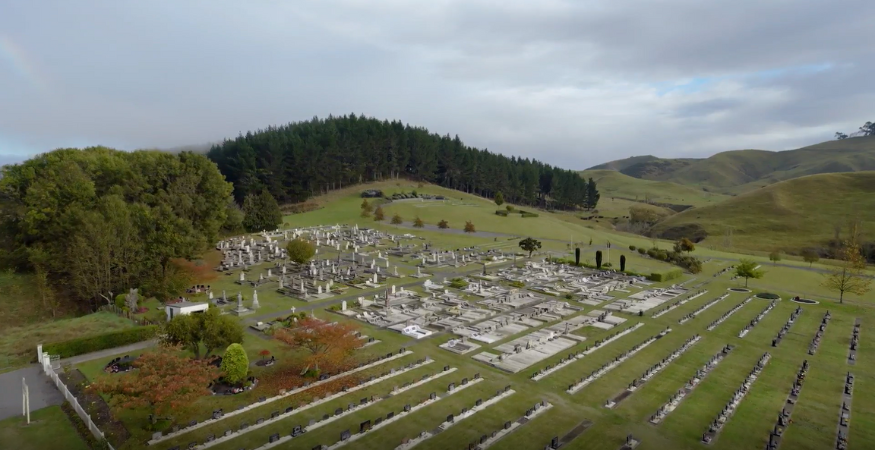
A “real gem” located within New Zealand’s famous food and wine country, Central Hawke’s Bay is a small rural district on the east coast of the North Island. It covers around 3,300 square kilometres and is home to approximately 16,000 people.
With beautiful ranges, beaches and boasting a deep heritage, the district is made up of multiple townships, each contributing to the unique character of the region.
As a proud and thriving community, Central Hawke’s Bay District Council is dedicated to sustainable growth and preserving their unique legacy - one that’s rich in Māori and colonial history, with historic sites and cemeteries that provide connections to the past.
The council currently manages 11 cemeteries across the district, as well as 3 that are closed - covering over 20 hectares in total.
From paper to digital.
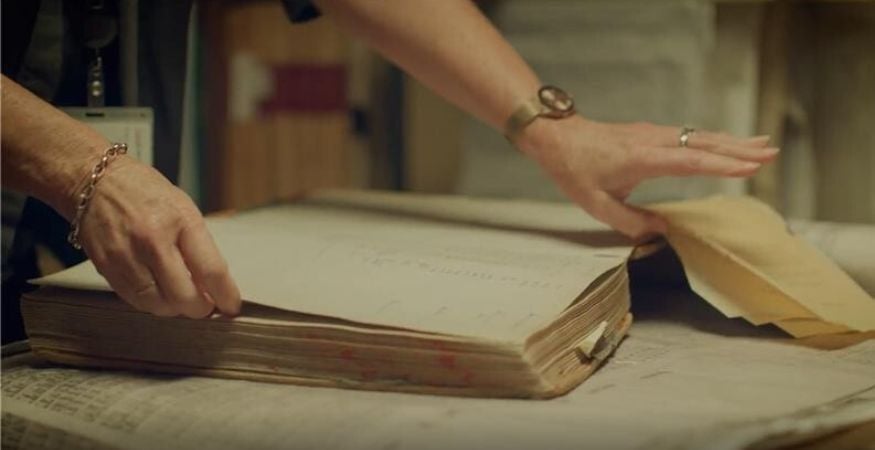
Prior to PlotBox, Central Hawke’s Bay were using cumbersome, paper-based systems, which required the cross-referencing of indexes with old books and maps.
Direct families to grave sites meant physically getting paper out and photocopying it for them to take away with them.
As part of the team’s strategic direction, migrating to PlotBox has made these processes much easier, and having implemented it, they can now navigate their 11 cemeteries without physically having to go on site.
This also allows their records to be matched to exact plot locations, allowing families to more easily find their resting places, of their loved ones, along with other related information - all simply by typing in a few details.
The team can also now view information on plot availability and occupancy more clearly, while vast improvements have been made to financial management and analytic reporting functionality.
That’s, in part, been helped by enabling them to create their own dashboards and widgets - allowing them to see at a glance, for example, the number of burials per month, or what’s been invoiced at any given time.
Having made things much easier across different areas of the business, they describe it as, “A game changer.”
Old problems and pain points.
Central Hawke’s manual systems caused a pain point, utilizing printed maps and handwritten notes, along with physical files and books that made locating plots slow and prone to error - and how reservations were recorded, inconsistent.
The online maps that they did have were outdated and the electronic database available offered limited information - mainly showing headstone images and basic plot details.
Locating cemetery plots and updating records was especially tedious, with staff having to, “mentally wrestle” with large maps and update records by hand.
Tracking deed owners was also challenging due to incomplete data, complicating family follow-ups and making plot identification unreliable.
Going digital was to make a huge difference in managing those types of paper-heavy processes.
The impact of challenges.
For the team, it meant not always having the correct information on hand, making it hard to assist grieving families promptly.
Paper maps slowed processes for showing locations visually, and the team would often have to ‘ground truth’ quite often to ensure the paper record was correct.
During the implementation, historical inaccuracies were detected due to old data being misinterpreted over the years [for instance, misspelt names or inconsistencies between the record and the detail on the headstone].
As such, the process enabled a large data cleanup that addressed many of those issues.
Why PlotBox?
Margaret first encountered PlotBox while attending a cremation and cemetery conference in Rotorua in 2021.
One of the things to stand out was the on-screen cemetery mapping, and the public's ability to find their way in the cemetery via a "yellow brick road" - which provided the "wow factor". It was also something she felt that ground staff would find very useful.
She also saw how PlotBox would provide the ability to preserve historical records, especially in relation to archive law dictating that cemetery records be kept in perpetuity.
From a technical perspective, Jessie believed that PlotBox offered a comprehensive solution that integrated mapping, data, CRM and public access via the EverAfter digital platform.
For her, it was the ability to streamline operations by centralizing and digitizing their cemetery data.
Day to day benefits.
For Amanda, being able to accurately and promptly look at their records and plots from the office and advise families or contractors of site details has made things a lot easier than going through books and paper records.
The team can now also report on cemetery data and track capacity accurately, where they weren’t able to do that previously.
As well as this, they can now carry out risk assessments, which is important, especially in the older parts of their cemeteries, and accurately attach details straight to the records, meaning less admin workload for the team.
Amanda also acknowledges how the system has improved data accuracy, further reducing admin workload and making collaboration across departments easier.
Digital cemetery mapping.
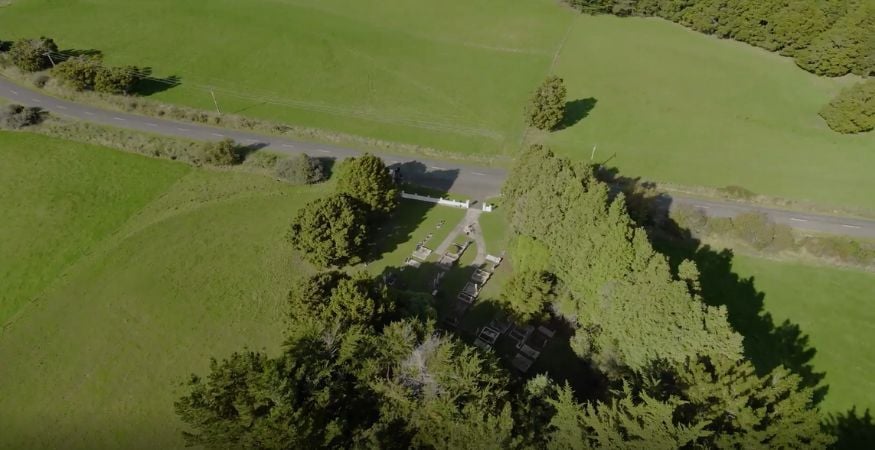
PlotBox’s high resolution digital mapping imagery has significantly enhanced the team’s admin and operational efficiency.
The interactive GIS overlays enable more precise real-time plot identification, minimizing on site search time [sites can be up to 30 mins drive apart] and reducing the margin of error.
In addition, the ability to print a single page as a visual reference, complete with aerial imagery and plot coordinates has streamlined internal workflows and elevated the quality of data they can share with external stakeholders.
That shift, they say, has not only improved accuracy, but also supports a more professional and data-driven presentation of cemetery information for them.
Connecting with the community.
PlotBox’s interactive digital maps have made a huge difference for Central Hawke’s Bay in better supporting families.
As well as being able to more quickly and accurately show which plots are available, they’re also able to cut down on admin work, which means a faster service all round.
With the EverAfter digital platform allowing the public to easily access burial and genealogical information online, processes are made more streamlined for everyone, including staff, contractors, funeral directors, and families themselves.
Amanda says the feedback from the public on EverAfter has been very positive, while Jessie adds,
“We’ve had an increase of engagement from the public…and [it has] been adopted pretty quickly - increasing that customer experience - PlotBox has definitely helped us with that.”
What’s next?
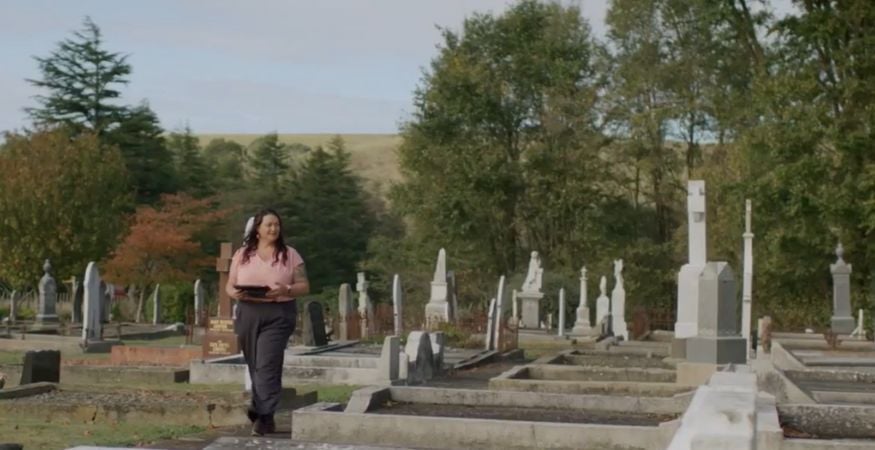
In terms of next steps, the focus is on embedding the system into daily operations more, and exploring opportunities for further integration.
As well as that, they’re aiming to strengthen public engagement through the EverAfter portal, while continuing to refine their digital service.
Looking ahead, the team also hopes to collaborate further with PlotBox on the next phase of their mapping initiative to enhance the customer experience even further.
Empowering growth.
Jessie sees PlotBox evolving to become a central hub for community engagement, offering real-time access to cemetery data and integration with their services.
She says, “it's a foundation for smarter, more responsive public service. And again, enhancing the customer experience that we want. If we can keep doing that, coming into the future and building on that, that’d be amazing.”
Advice to other cemeteries.
For others considering a digital cemetery software solution, Amanda suggests looking at a separate data audit prior to procurement to identify any gaps and opportunities.
She says, “[You] really need to begin by thoroughly cleansing out your source data, because everything comes back to that.
It's quite a significant task on its own, especially for us going back [to] historic paper records - it was a really big undertaking…but really important that we did it.
If it's possible, assign dedicated resources specifically to that data cleansing and mapping…and understanding your data requirements in the integration process early on in the project.”
She continues,
“We found reviewing and updating our templates in advance to prevent any delays, coordinating with [the] finance team…understanding how it will impact and what is going to be required [is necessary to] do that part seamlessly.”
As well as this, the team felt that having good discussions with wider teams that may need to be involved, and allowing sufficient time for each step of the process, had a number of benefits, including, the opportunity to audit their entire cemeteries department, reveal outdated processes, and identify any information gathering methods that could be improved upon.
Is digital transformation on your agenda? Talk to the team today and discover what we can do together.