Five in Five: PlotBox Digital Cemetery Mapping
In the first in a new series, we give five reasons in five minutes why PlotBox's cemetery mapping solution is the best choice for deathcare providers.
Learn how PlotBox’s cemetery software helped the Archdiocese of San Francisco modernize operations and improve family care over 10 years of partnership.
| Read time: 6 mins
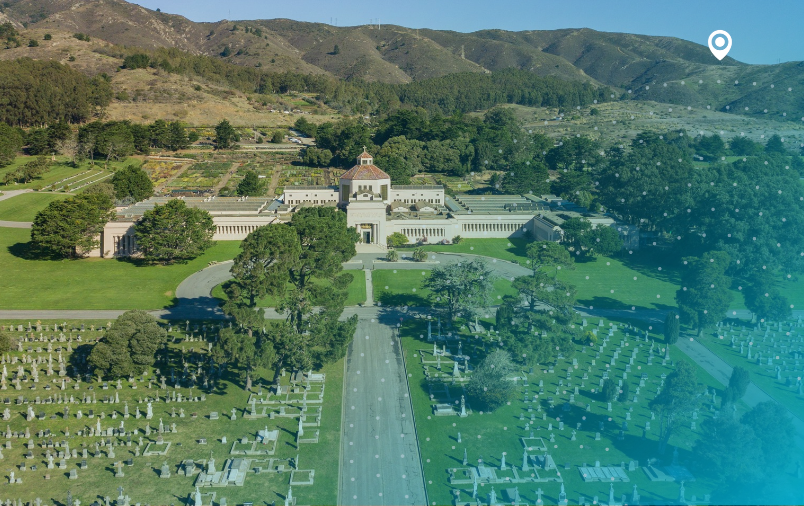
As stewards of the Catholic Cemeteries of the Archdiocese of San Francisco, Director of Cemeteries Monica Williams and her team manage 7 cemeteries across the San Mateo and Marin Counties.
Based at Holy Cross Catholic Cemetery in Colma, California, they maintain vast numbers of records dating back to its inception in 1887, and over 300 acres of cemetery grounds.
As one of our longest standing customers, and among the earliest to see the true potential of long-term partnership with PlotBox, we took the opportunity to speak with Monica to reflect on how that partnership has evolved to meet the changing deathcare landscape over the last ten years.
My initial impression of PlotBox was of [PlotBox co-founders] Sean and Leona McAllister and their great energy and their interest in cemeteries, what we do, and how to create a product and service that would help cemeteries do what they do better.
When the company that we had been in relationship with unfortunately had to dissolve, we reached out to the market.
PlotBox was one of several companies that we talked to about forming a new relationship with.
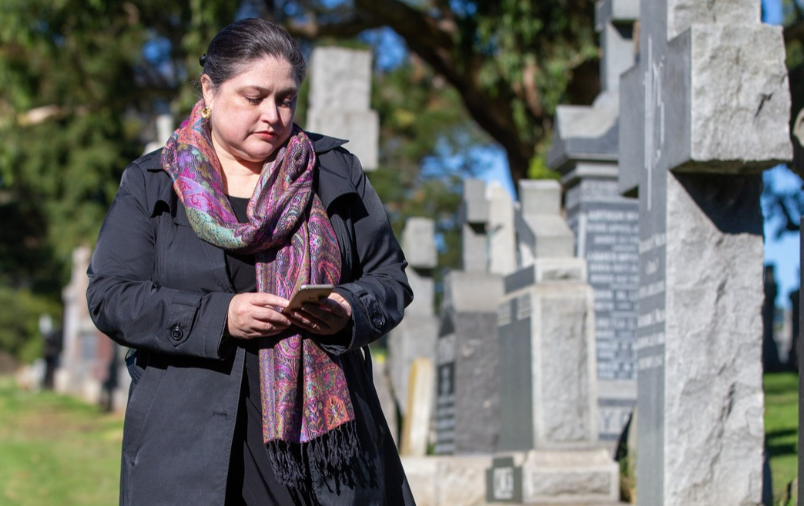
We were pleased with everything that we saw from PlotBox, from the features, to the mapping, the comprehensive package, and the potential.
PlotBox was cloud-based - 10 years ago, not everyone was, so it was a good fit for us.
One very specific example is PlotBox Pay.
That has really freed up time. It means that our family service department can interact directly with families and automate payments without interrupting the accounting department every few minutes with a card or payment information.
That definitely makes our arrangement process smoother - we can take care of everything right there [and then].
That's a very concrete example, but generally I could speak to the extent to which our processes are more automated, or that all of our information is on one screen, as opposed to looking for cheat sheets that tell you what code is where, and so on.
That all allows us to move the family through the process in a more timely manner.
I don't know that anyone wants to be in our offices, right? But the fact that we're able to efficiently move them in and out means they don't have to be in a cemetery office longer than they absolutely have to. I think that's helpful to them.
I always say it's like planning a wedding, but you have 3 days instead of 3 years to do it.
In an arrangement office, first of all, the advisor now has more information at their fingertips to prepare for that meeting, so they can review that more quickly.
I think the goal of so many of our arrangers is that they want to walk the family out of the office, and for the family to say, “You made this so much easier.”.
We can't make the loss go away, we can't do any of that. We just want to make it easier.
And to the extent that we can hit a few buttons, we can make a few clicks, the information is there, and we can put the arrangement together efficiently and quickly.
We're lessening the burden on the family and giving them back some time in a period where they have a lot to do.
If a family is sitting with you and asks you where their loved one is - being able to just pull it up immediately, bolsters their level of confidence in you.
They're happy to see that you have the technology.
This integrates with mapping in a helpful way, because now we have visibility of whether there’s a marker on a grave, for example.
That means we can share that information instantly with a family inquiring about locations - and that builds trust.
Because we don't come from a sales background traditionally, this is the first time that staff have really used anything in the CRM world.
And because we’re still not a heavy sales-focused organization, they use it more to track and have more cohesive interactions with families.
For example, if I'm not here, someone else can pick it up and look at the notes and know exactly what our last interaction or conversation with them was.
From the accounting department perspective, if someone calls to check on a balance - they can pull up the information they need right away.
There's continuity of information.
And again, it bolsters the impression that we know what we're doing.
One example is on Sundays [when we're not here in the office], a posted sign with a QR code gets them to our EverAfter website. From there, they can look up their loved ones’ locations.
That's really helpful. We have a lot of visitors on Sundays, so that’s a very customer-friendly thing from our perspective.
After the drone mapping, we discovered an entire section that had been left as a buffer during development of one section - we had never gone back and unbuffered it.
It was very exciting to be able to open up a good deal of inventory from that.
Linking the drone mapping has been helpful in terms of looking at inventory that we can make available for sale.
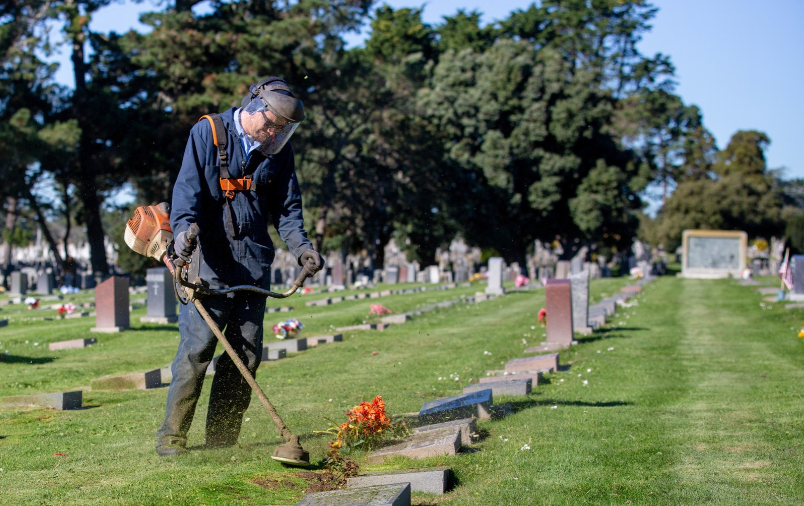
The mapping has also helped us to identify where there may be trip hazards or things like that. Linking it to work orders has been a useful vehicle to communicate to grounds teams where maintenance needs to be carried out.
Previously, issuing work orders was very much a manual, triplicate copy kind of process. This allows us an overall way of tracking, other than flipping back through to see if things have been completed.
That has been a tremendous leap forward - helping us stay on top of work orders, getting them completed more quickly, and knowing whether or not something has been completed.
That’s been a great addition.
That has really helped across a number of levels. Ultimately, it better serves the family by giving all staff a better view of where all memorial orders are in the process.
In the past, if we had processed a memorial order, only the person who processed that order knew where that was.
Now, the advisor simply pulls it up on the module and is able to answer that family's question immediately without any delay.
That’s great for both the family and for the family service advisor and has really streamlined our memorialization process.
It’ll help the reporting tremendously.
When we initially brought information over I don’t think we knew how to make best use of it - how to return certain information without a lot of manual work, so we're looking forward to that being a much more organized way of looking at and utilizing information.
I appreciate the constant reviewing of the product that PlotBox does, incorporating suggestions from customers, and I absolutely appreciate that it is not a product that was just put on the shelf with nothing ever happening from that day forward.
The value of the partnership is in the responsiveness and being able to have a conversation, “What are we doing? What do you need? Where do you need more help? What else could we be doing?”.
That’s growing together.
I speak to many people who are in that position and I tell them all essentially the same thing.
The first is, there's no perfect software out there. If there were, we'd all be using the same product. Everybody has different needs, different priorities, and different budgets.
Decide what your priorities are and your budget is, and find the company that best matches those.
But to that idea of responsiveness - if I have a problem, and something isn't working, and I've got a family sitting in my office, how quickly can I get this problem solved? How quickly can I get information? How is this company going to continually look at bettering their product and service in order that I can better my product and service?
Are they going to be there when I've got a question, when I've got a new employee? Are they going to help me with training?
There's a lot, and each of us needs fairly different things, but really, customer support is huge, and that is by far the one thing that PlotBox does better than most other companies, regardless of industry, frankly.
Weighing up building on top of an enterprise platform vs a purpose-built solution? Download our eBook for everything you need to know:
In the first in a new series, we give five reasons in five minutes why PlotBox's cemetery mapping solution is the best choice for deathcare providers.
Enhance your cemetery inventory control with PlotBox's powerful mapping software and GIS mapping and discover the benefits of accurate digital...
Discover how PlotBox's cutting-edge cemetery software streamlines cemetery management, enhancing efficiency, accuracy, and customer satisfaction.